The Devastating Airstrike That Shook Kabul
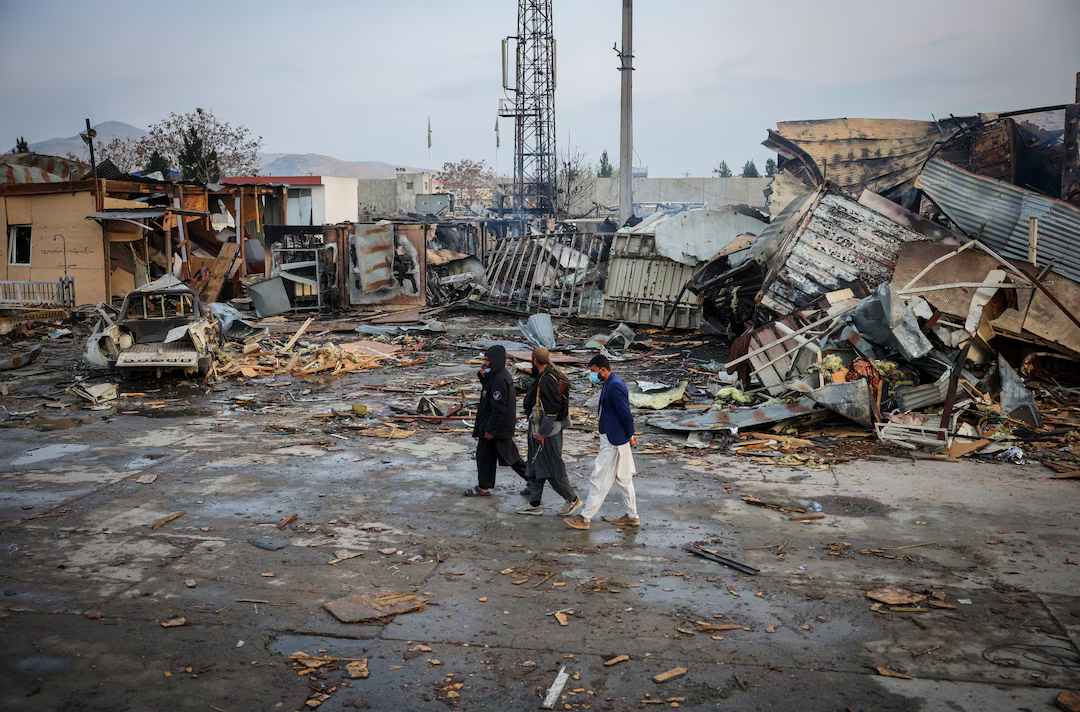
On the evening of March 16, 2026, during the holy month of Ramadan, explosions ripped through a drug rehabilitation center in eastern Kabul, turning a place of healing into a scene of unimaginable loss. Patients had just finished dinner or gathered for prayer when the strikes hit, leaving the compound in flames and rubble. This event, part of Pakistan’s Operation Ghazab Lil Haq, quickly became the deadliest single incident in the ongoing border tensions.
Afghanistan’s Official Claim Against Pakistan
The Taliban-led government in Kabul wasted no time pointing fingers at Pakistan, claiming the Pakistan Air Force deliberately targeted the Omid Addiction Treatment Hospital and killed 408 people while injuring 265 more. Interior Ministry spokesman Abdul Mateen Qanie described it as a direct assault on civilians recovering from addiction, with bodies pulled from the debris for days afterward. Afghan officials insist the facility housed no military targets, only vulnerable patients seeking a fresh start.
Eyewitness Testimonies That Paint a Grim Picture
Survivors like security guard Omid Stanikzai recounted hearing jets overhead before Afghan forces fired back, only for the planes to circle and drop bombs that set the place ablaze. Doctor Maiwand Hoshmand remembered patients mid-prayer when three sections of the center were hit. These personal accounts from those inside add raw emotion to the official numbers and make the tragedy feel painfully real.
Pakistan’s Firm Rejection and Counter-Claims
Islamabad pushed back hard, calling the Afghan accusations “entirely baseless” and “false and misleading.” Information Minister Attaullah Tarar insisted the strikes were precise hits on military installations and terrorist support infrastructure at the former Camp Phoenix site, with secondary explosions proving ammunition depots were present. Pakistan’s military maintained no hospital or civilian facility was intentionally targeted, framing the operation as necessary counterterrorism.
Why Pakistan Denies Hitting a Civilian Site
Pakistani officials argue their intelligence pointed to drone production and weapons storage in parts of the old NATO base, even if the main rehab buildings were nearby. They point to visible blasts after the strikes as evidence of legitimate targets, not innocent patients. This denial has fueled a war of narratives that shows no signs of slowing down.
Inside the Omid Addiction Treatment Hospital Before the Strike
The Omid center, also known as Ibn Sina Drug Addiction Treatment Hospital, started life as Camp Phoenix—a sprawling U.S. and NATO base on Kabul’s outskirts that was abandoned after the 2021 withdrawal. Converted around 2016 into a state-run rehab facility, it grew to house up to 3,000 patients in a country battling one of the world’s worst opioid crises. Locals called it the “camp of hope” because it offered detox, counseling, and a chance at normal life for street addicts rounded up by authorities.
From NATO Base to Beacon of Hope
What was once a military hub became Afghanistan’s largest drug treatment site under both the previous government and the Taliban. It featured dorms, a meal hall, prayer areas, and even container housing for overflow patients. By 2023, demand had pushed it far beyond its original 1,000-bed capacity, turning it into a lifeline for families desperate to save loved ones from addiction’s grip.
Eyewitness Stories That Break Your Heart
Imagine finishing a simple Ramadan dinner only to have the building collapse around you. Patient Mohammad Shafee was helping in the kitchen when the first blast sent everyone running. He returned to find most of his friends gone. These stories remind us that behind every statistic is a human life cut short in the most unexpected place.
A 50-Year-Old Patient’s “Doomsday” Memory
Ahmad, 50 and in treatment at Omid, described the scene as pure doomsday—fires everywhere, friends burning alive, and no way to save them all. His words still echo the terror of that night and highlight how quickly a recovery space became a graveyard.
Discrepancies in the Death Toll Figures
Afghan authorities stick to 408 dead and 265 wounded, based on bodies recovered and hospital admissions. Yet the United Nations Assistance Mission in Afghanistan (UNAMA) puts the toll lower at 143 killed and 119 injured after its own assessment. NGOs like the Norwegian Refugee Council speak of “hundreds” without nailing exact numbers, leaving room for ongoing debate.
What Independent Sources Are Saying
Reporters on the ground counted dozens of bodies in ambulances and morgues the next morning, with some estimates climbing past 100. The gap between official claims and verified counts fuels skepticism on both sides and complicates any path to accountability.
| Source | Killed | Injured | Notes |
|---|---|---|---|
| Taliban Government | 408 | 265 | Based on initial recovery efforts |
| UNAMA | 143 | 119 | Independent site assessment |
| Norwegian Refugee Council | Hundreds | Hundreds | First-hand observation next day |
| Media/Reporters | 30–100+ | Not specified | Bodies seen in real time |
The Broader Context of the 2026 Afghanistan-Pakistan Conflict
This strike didn’t happen in a vacuum. Tensions between the two neighbors have simmered since the Taliban took power in 2021, with Pakistan repeatedly accusing Afghanistan of sheltering Tehrik-e-Taliban Pakistan (TTP) fighters who launch attacks across the border. A fragile ceasefire in October 2025 fell apart by February 2026, leading to Pakistani airstrikes on military targets and Afghan counter-moves.
Roots in TTP Militancy
Pakistan sees the TTP as an existential threat, blaming Afghan soil for safe havens that enable deadly raids inside its territory. The Taliban denies harboring them and calls the issue Pakistan’s internal problem. This finger-pointing has turned a shared border dispute into open conflict.
A Timeline of Escalating Tensions
Here’s a quick look at how things spiraled:
- October 2025: Major border clashes and short-lived Qatar-brokered ceasefire.
- February 27, 2026: Pakistan launches widespread airstrikes after Afghan cross-border actions.
- March 16, 2026: Strikes hit Kabul, including the Omid center.
- March 19, 2026: Temporary Eid al-Fitr ceasefire announced.
International Reactions Pour In
The world watched in horror as condemnations rolled in from every corner. India called it a “heinous act of aggression,” while China urged restraint and offered to mediate. The UN, EU, and human rights groups all stressed that hospitals and civilian sites must be protected under international law—no exceptions.
- India: Labeled it an assault on sovereignty and a massacre of civilians.
- China: Expressed concern over casualties and pushed for talks.
- UN Secretary-General: Strongly condemned the strike and called for accountability.
- EU: Highlighted violations of humanitarian law and the Geneva Conventions.
- Human Rights Watch: Demanded an impartial investigation into the targeting.
Impact on Afghanistan’s Drug Rehabilitation Programs
The loss of Omid is more than a building—it’s a massive blow to Afghanistan’s already strained efforts against widespread drug addiction. With thousands of patients suddenly without a safe place, families fear a surge in relapses and street-level chaos. The Taliban has promised compensation, but rebuilding trust and capacity will take years.
Geopolitical Ripple Effects Across South Asia
This incident risks pulling in bigger players. India has sided firmly with Afghanistan, while Pakistan’s allies like China walk a tightrope. The 2,600-kilometer Durand Line remains disputed, and any prolonged fighting could destabilize the entire region, affecting trade routes, refugee flows, and counterterrorism cooperation.
Comparison: Military Strikes vs Diplomatic Solutions
Pros of military action (Pakistan’s view): Quick neutralization of perceived threats; sends a strong deterrent message to militants.
Cons: High civilian risk, international backlash, and escalation that solves nothing long-term.
Pros of diplomacy: Builds trust, addresses root causes like TTP safe havens, and avoids needless deaths.
Cons: Slow progress, fragile agreements, and accusations of weakness from hardliners on both sides.
People Also Ask: Your Burning Questions Answered
Why did Pakistan strike the Kabul rehab center?
Pakistan maintains it targeted terrorist infrastructure and ammunition sites at the former Camp Phoenix location, not the rehab facility itself. Afghan claims of deliberate civilian targeting are rejected as propaganda.
What is the confirmed death toll from the Kabul airstrike?
Official Afghan figures say 408 killed, but UN assessments put it at 143. Independent observers report numbers in the low hundreds, with exact verification still ongoing amid the chaos.
Has the UN condemned the Pakistan airstrike on Kabul?
Yes—UNAMA and the Secretary-General have strongly condemned the attack, calling for protection of medical facilities and an impartial investigation into possible violations of international humanitarian law.
Is the Omid center still operating after the strike?
Large sections were destroyed, and rescue efforts continue, but the facility is effectively out of service for now. Survivors were transferred to other Kabul hospitals.
What led to the 2026 escalation between Afghanistan and Pakistan?
Years of accusations over TTP militants using Afghan territory, failed ceasefires, and border clashes that boiled over in February 2026.
FAQ on the Kabul Rehab Center Incident
Q: How can families check on loved ones who were at Omid?
A: Contact Kabul’s forensic medical department or major hospitals like Wazir Akbar Khan, where many bodies and wounded were taken. The Taliban government has set up hotlines for inquiries.
Q: Will Pakistan face international consequences?
A: Calls for investigations are growing from the UN and human rights groups, but enforcement depends on global pressure and evidence presented at forums like the UN Security Council.
Q: What support exists for addiction recovery in Afghanistan now?
A: Smaller facilities remain open, but capacity is limited. International NGOs are stepping in with emergency aid, though long-term funding is uncertain after this tragedy.
Q: Could this lead to full-scale war?
A: A temporary ceasefire is in place for Eid, but without genuine talks on TTP and border issues, the risk of renewed fighting stays high.
Q: How can I help the victims or their families?
A: Donations to verified NGOs like the Norwegian Refugee Council or Red Crescent Afghanistan go directly toward medical aid, funerals, and survivor support.
This tragedy in Kabul forces us to confront the human cost when old grudges meet modern weapons. Whether you see it as a counterterrorism success or an unforgivable civilian massacre, one thing is clear: innocent lives caught in the crossfire deserve better than political spin. The road to lasting peace will require honesty, accountability, and a willingness to talk—before more rehab centers, more families, and more hope turn to rubble. (Word count: 2,812)